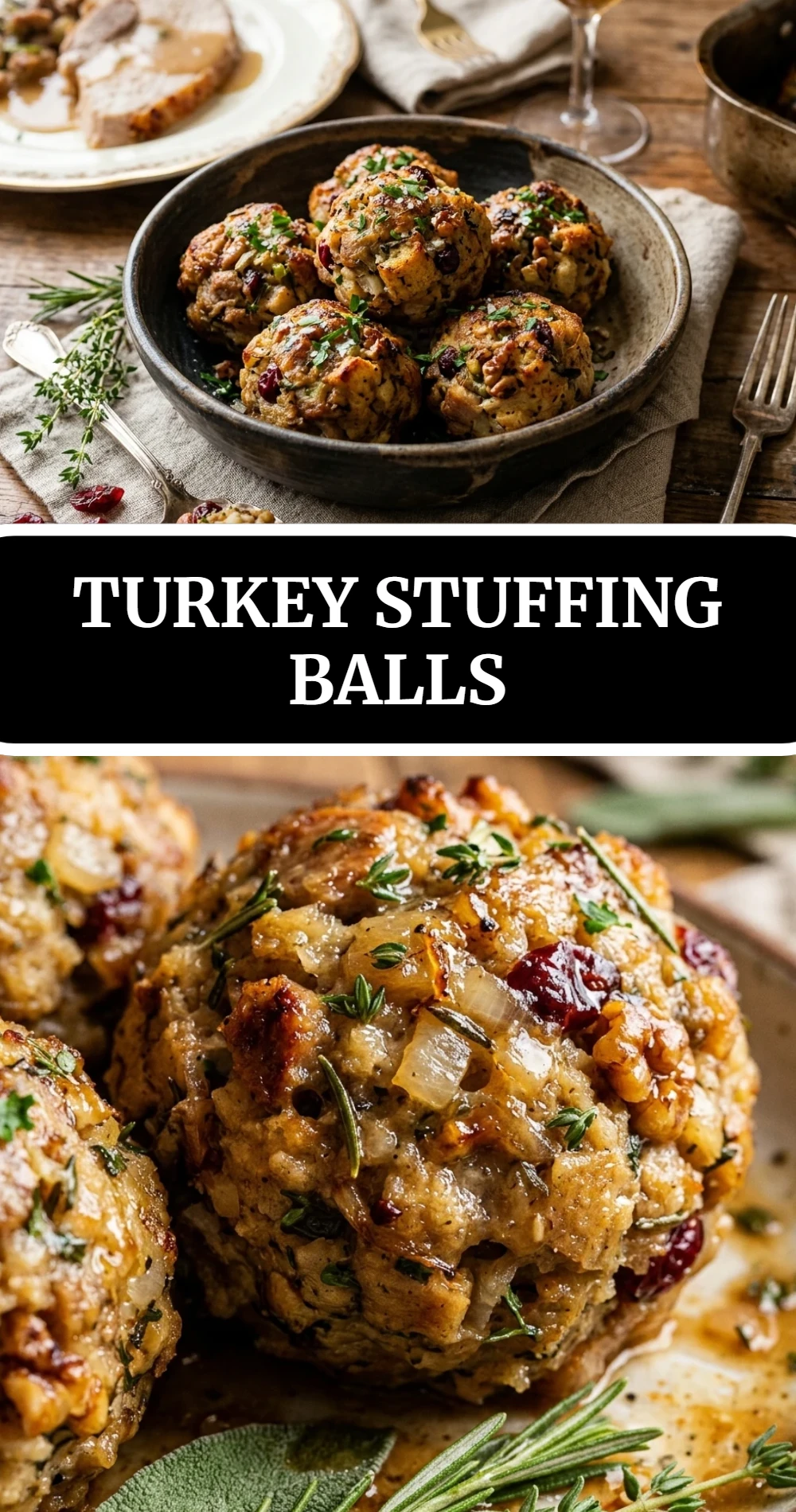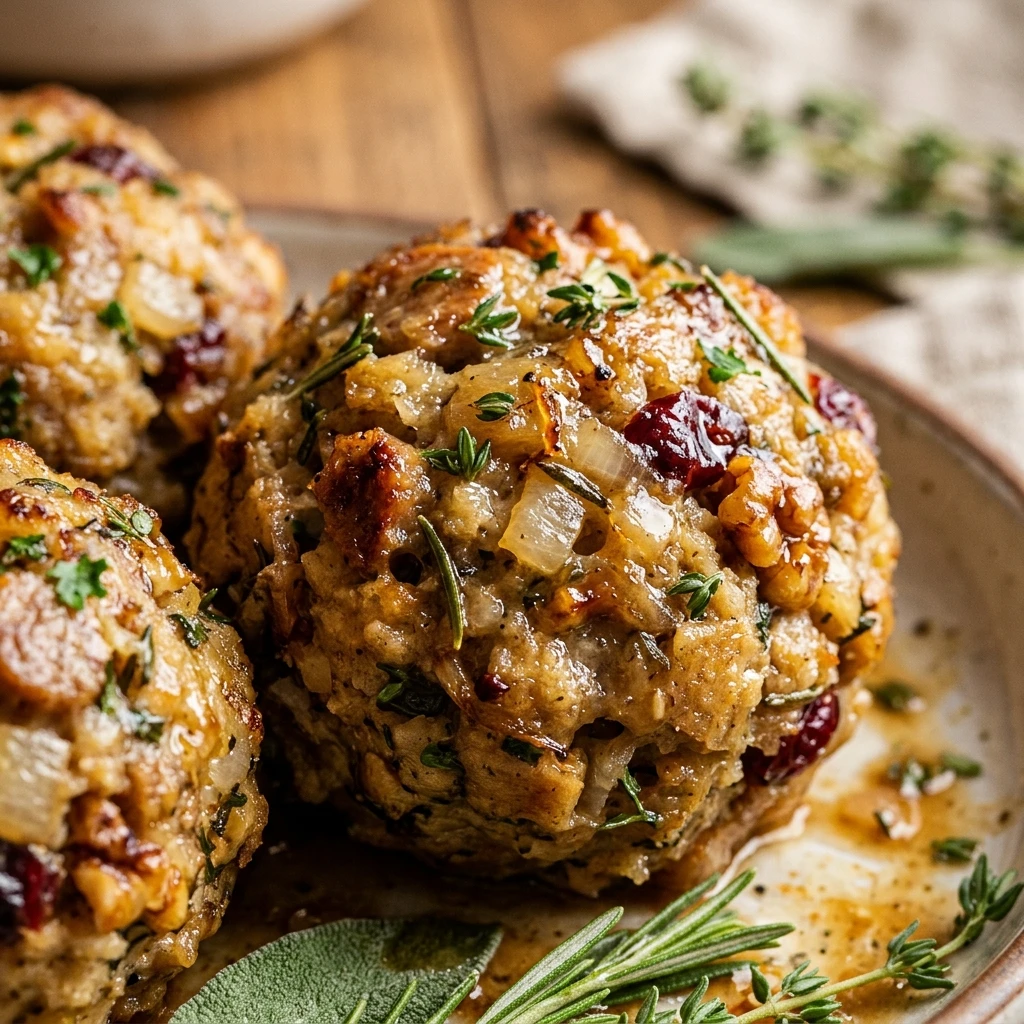
Turkey stuffing balls are the ultimate holiday side dish that everyone loves. They bring all the classic flavors of traditional stuffing into perfect, bite-sized portions. These little treats are golden and crispy on the outside, while staying incredibly moist and tender on the inside. When they bake in the oven, your kitchen will fill with the comforting aroma of sage, thyme, and toasted bread. They are much easier to serve than traditional casserole stuffing and ensure that every person gets those delicious crispy edges. Whether you are hosting a big Thanksgiving dinner or a simple Sunday roast, these stuffing balls add a special touch to your plate.
Why Make This turkey stuffing balls
Making turkey stuffing balls instead of cooking stuffing inside the bird has several big advantages. First, they cook much faster and more evenly. You do not have to worry about the stuffing reaching a safe temperature inside the turkey, which often leads to overcooking the meat. Second, these balls offer the perfect texture. Since they are individual portions, they develop a wonderful crust all the way around. They are also very convenient for meal prepping. You can make them ahead of time and just pop them in the oven when you are ready to eat. Plus, kids love the fun shape, making them a hit for the whole family.
How to Make turkey stuffing balls
The process is simple and rewarding. You start by sautéing fresh vegetables like onions and celery in butter until they are soft and fragrant. This creates a flavor base that carries through the whole dish. You then toss this mixture with breadcrumbs or dried bread cubes and a blend of aromatic herbs. To bind everything together, you whisk eggs with a savory broth and pour it over the bread mixture. After a quick rest to let the bread soak up all the liquid, you roll the mixture into small, even balls. A quick bake in a hot oven turns them into golden brown nuggets of joy. It is a straightforward method that delivers professional results every time.
Ingredients
- 6 cups dried bread cubes (plain or seasoned)
- 1/2 cup unsalted butter
- 1 large yellow onion, finely diced
- 3 stalks celery, finely chopped
- 2 cloves garlic, minced
- 1 teaspoon salt
- 1/2 teaspoon black pepper
- 1 tablespoon fresh sage, chopped (or 1 teaspoon dried)
- 1 tablespoon fresh thyme, chopped (or 1 teaspoon dried)
- 1/2 teaspoon dried rosemary, crushed
- 1 1/2 to 2 cups chicken or vegetable broth (halal certified)
- 2 large eggs, lightly beaten
- 2 tablespoons fresh parsley, chopped
Directions
- Preheat your oven to 375°F (190°C). Lightly grease a large baking sheet or line it with parchment paper to prevent sticking.
- Place the dried bread cubes in a very large mixing bowl and set them aside.
- In a large skillet, melt the butter over medium heat. Add the diced onion and celery. Sauté for about 5 to 7 minutes until the vegetables are soft and translucent.
- Stir in the minced garlic, salt, pepper, sage, thyme, and rosemary. Cook for another 1 minute until the herbs are fragrant.
- Pour the buttery vegetable mixture over the bread cubes. Toss gently with a large spoon to distribute the flavors.
- In a small bowl, whisk together the beaten eggs and 1 1/2 cups of the broth.
- Slowly pour the liquid mixture over the bread cubes. Fold it in gently until all the bread is moistened. If the mixture feels too dry or doesn’t hold together when squeezed, add the remaining 1/2 cup of broth.
- Let the mixture sit for 5 to 10 minutes so the bread fully absorbs the moisture.
- Using your hands or a large cookie scoop, form the mixture into balls about the size of a golf ball (roughly 2 inches in diameter). Do not pack them too tightly, or they will be heavy.
- Place the balls on the prepared baking sheet, leaving a little space between each one.
- Bake for 20 to 25 minutes, or until the tops are golden brown and slightly crispy.
- Garnish with fresh parsley and serve warm.
Nutritional Information
This nutritional information is an estimate per serving (approximately 2 stuffing balls):
- Calories: 185 kcal
- Total Fat: 9g
- Saturated Fat: 5g
- Cholesterol: 55mg
- Sodium: 420mg
- Total Carbohydrates: 22g
- Dietary Fiber: 2g
- Sugars: 3g
- Protein: 5g
- Vitamin D: 4% DV
- Calcium: 6% DV
- Iron: 8% DV
How to Serve turkey stuffing balls
These stuffing balls are incredibly versatile. The most traditional way to serve them is alongside roast turkey or chicken, drizzled with a rich, warm gravy. They also pair beautifully with cranberry sauce, which provides a sweet and tangy contrast to the savory herbs. For a casual dinner, you can serve them with roast beef or even as a side to a hearty bowl of soup. If you have leftovers, they make an amazing addition to a “leftover sandwich”—just slice them in half and layer them with turkey and greens. They also look beautiful arranged on a platter as an appetizer for a holiday party.
How to Store turkey stuffing balls
Storing these treats is easy. If you have leftovers, let them cool completely to room temperature. Place them in an airtight container and keep them in the refrigerator for up to 4 days. To maintain their crispy texture, it is best to reheat them in the oven at 350°F (175°C) for about 10 minutes. If you want to freeze them, you can freeze them either before or after baking. Arrange them on a tray to freeze individually, then transfer them to a freezer bag. They will stay fresh in the freezer for up to 3 months. When you are ready to eat, thaw them in the fridge overnight and bake as directed.
Expert Tips for Perfect turkey stuffing balls
For the best results, use high-quality bread. A mix of white, sourdough, or whole wheat adds great depth of flavor. If your bread is fresh, cut it into cubes and toast them in a low oven until they are dry and crunchy. This prevents the stuffing balls from becoming mushy. Another tip is to avoid over-mixing. Use a light hand when folding the liquid into the bread to keep the texture airy. If you want extra crunch, you can brush the tops of the balls with a little extra melted butter right before they go into the oven. Lastly, always taste your broth first; if it is very salty, reduce the amount of added salt in the recipe.
Delicious Variations
You can easily customize this recipe to suit your taste. For a sweet and savory twist, add 1/2 cup of dried cranberries or chopped apples to the mix. If you enjoy a bit of crunch, stir in 1/3 cup of chopped pecans or walnuts. For a meatier version, sauté some crumbled halal beef sausage and mix it in with the bread cubes. You can also change the cheese profile by adding 1/2 cup of grated parmesan or sharp cheddar for a savory, melted center. If you want a gluten-free option, simply swap the regular bread cubes for your favorite gluten-free variety.
Frequently Asked Questions
1. Can I make these stuffing balls in advance?
Yes! You can prepare the mixture and roll the balls up to 24 hours in advance. Keep them covered in the fridge and bake them right before serving.
2. Why are my stuffing balls falling apart?
They usually fall apart if the mixture is too dry. Add a little more broth or another egg to help bind the bread cubes together.
3. Can I use store-bought stuffing mix?
Yes, you can use a boxed mix as a shortcut. Just follow the package directions for the liquid amounts, add an extra egg for binding, and roll them into balls.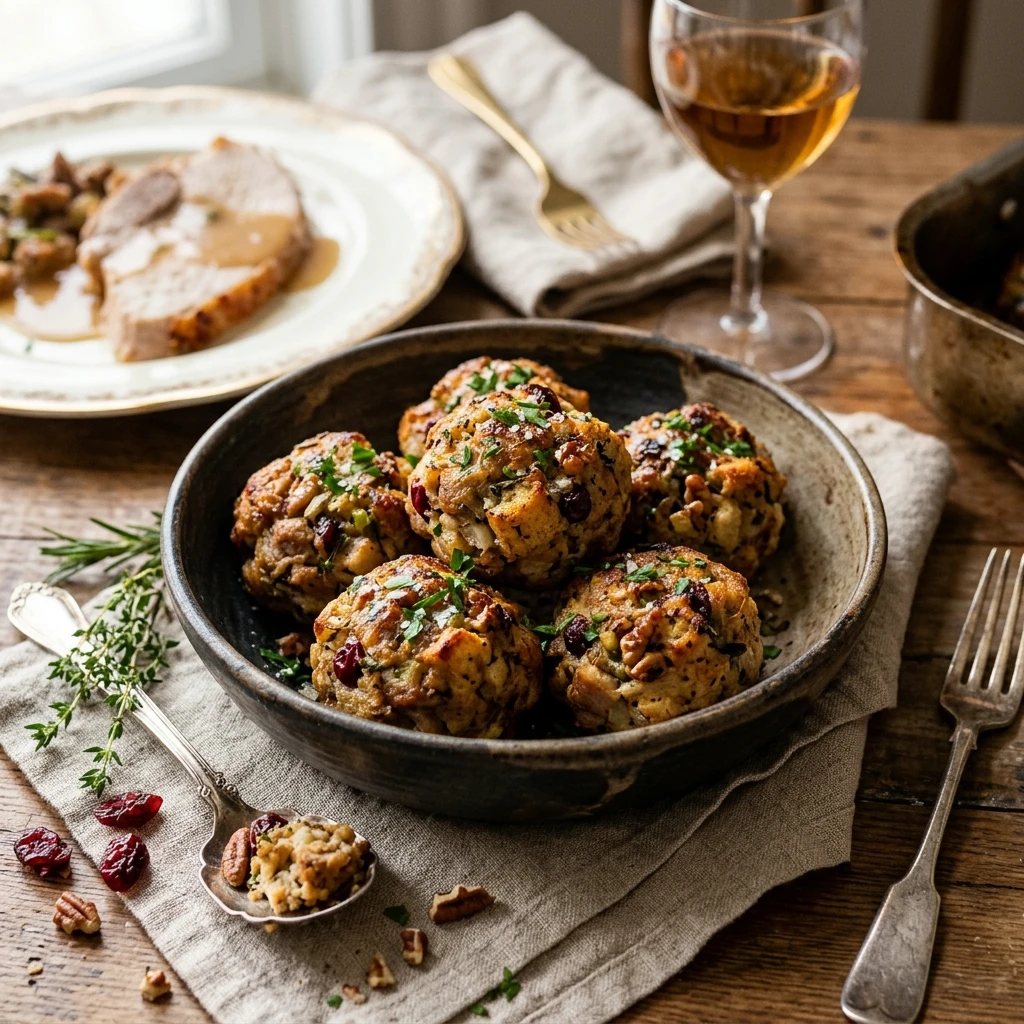
4. How do I get them really crispy?
Increase the oven temperature to 400°F (200°C) for the last 5 minutes of baking, or use the broiler for a minute or two at the end.
5. Can I make these vegan?
Yes, use a vegan butter substitute, vegetable broth, and a “flax egg” (ground flaxseed mixed with water) to bind the ingredients.
6. What is the best type of bread to use?
Stale or dried French bread, Italian loaves, or even thick-cut sandwich bread work best because they soak up the liquid without disintegrating.
7. Do I have to use fresh herbs?
While fresh herbs provide a brighter flavor, dried herbs work perfectly well. Just remember that dried herbs are more concentrated, so use about one-third of the amount of fresh.
8. Can I cook these in an air fryer?
Absolutely! Cook them at 350°F (175°C) for about 10-12 minutes, shaking the basket halfway through until they are golden and crisp.
9. How big should I make the balls?
Golf ball size is standard. If you make them too large, the center might stay too soft; if they are too small, they might dry out.
10. Can I add vegetables other than onion and celery?
Yes, finely chopped carrots, mushrooms, or even bell peppers make great additions. Just sauté them along with the onions.
Conclusion
Turkey stuffing balls are a fantastic way to elevate your holiday meal. They offer a wonderful combination of textures and flavors that traditional stuffing sometimes lacks. By following these simple steps, you can create a side dish that is not only delicious but also easy to manage during a busy cooking day. They are portion-perfect, visually appealing, and packed with savory goodness. Give this recipe a try for your next family gathering and watch them disappear from the plate! Don’t forget to share your results with us—we would love to hear how your stuffing balls turned out. Happy cooking!