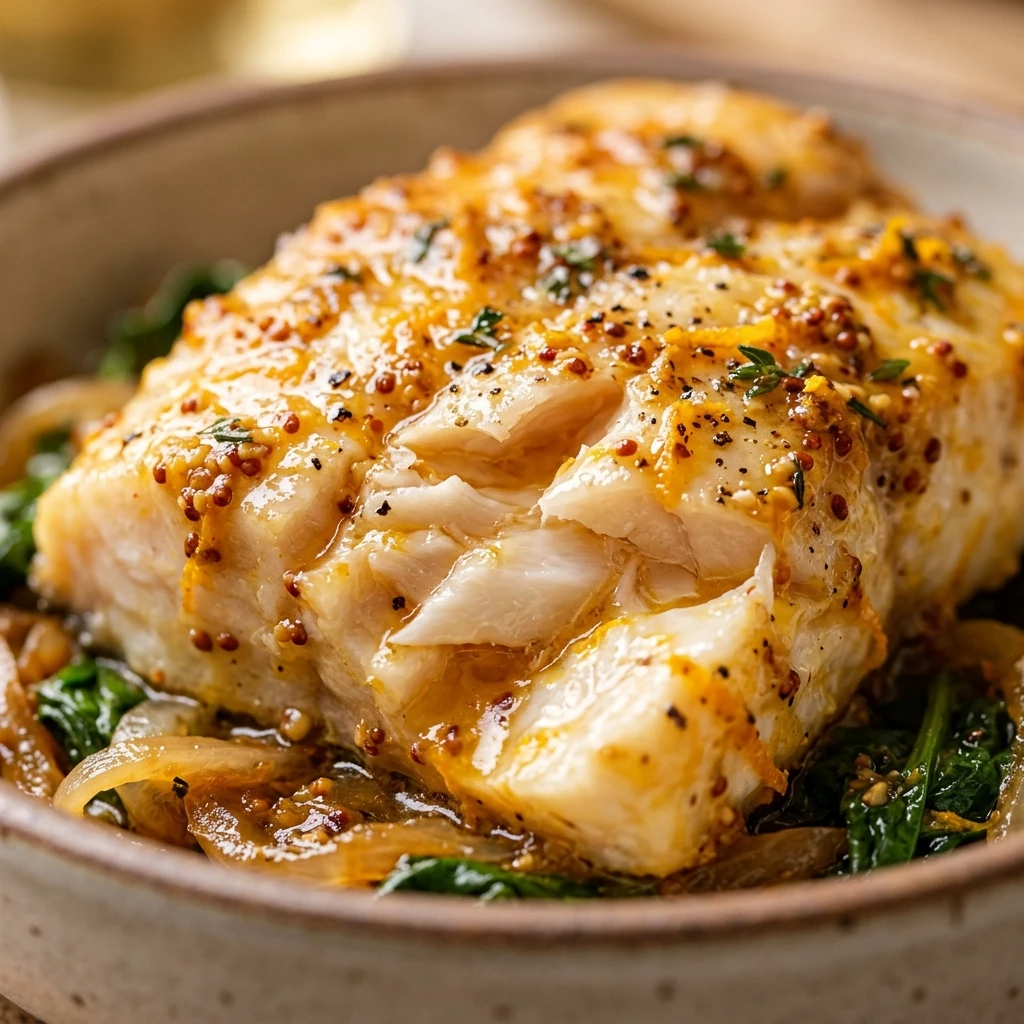
Finding a dinner recipe that feels sophisticated enough for a dinner party but is simple enough for a Tuesday night can be a challenge. This Orange Dijon Halibut strikes that perfect balance. The firm, flaky texture of fresh halibut pairs beautifully with a bright, tangy glaze made from citrus and stone-ground mustard. It is a light, protein-packed meal that highlights the natural sweetness of the fish while adding a punch of zesty flavor. Whether you are a seafood lover or just looking to add more healthy options to your rotation, this dish is sure to become a favorite in your kitchen.
Recipe Information
- Prep Time: 10 minutes
- Cook Time: 15 minutes
- Total Time: 25 minutes
- Servings: 4 servings
- Difficulty: Easy
Nutrition Values
- Calories: 285 kcal
- Protein: 36g
- Carbs: 8g
- Fat: 11g
- Fiber: 0.5g
Why Make This Orange Dijon Halibut
Orange Dijon Halibut is the ultimate recipe for anyone who wants maximum flavor with minimum effort. Halibut is known for its mild, sweet taste and firm texture, making it the perfect canvas for the bold flavors of Dijon mustard and fresh orange. This recipe is naturally gluten-free and avoids heavy creams or butters, keeping it light and heart-healthy. Because it bakes in under 15 minutes, it is an excellent choice for busy families. Additionally, it follows all halal dietary guidelines by using fresh citrus juices instead of white wine to deglaze or flavor the sauce, ensuring a delicious result for everyone at your table.
Ingredients
- 4 Halibut Fillets: Use 6-ounce portions, preferably skinless for even cooking.
- 1/4 cup Fresh Orange Juice: Provides the citrus base and natural sweetness.
- 1 tablespoon Orange Zest: Adds intense aromatic oils to the glaze.
- 2 tablespoons Dijon Mustard: Adds a sharp, tangy contrast to the sweet orange.
- 1 tablespoon Honey: Helps caramelize the fish and balances the acidity.
- 2 tablespoons Extra Virgin Olive Oil: Keeps the fish moist during the baking process.
- 2 Garlic Cloves: Minced finely to add a savory depth.
- 1/2 teaspoon Salt: Enhances all the individual flavors.
- 1/4 teaspoon Black Pepper: Provides a mild heat.
- Fresh Parsley: Chopped for a bright, herbal garnish.
Directions
Step 1: Preparation
Preheat your oven to 400°F (200°C). Line a large rimmed baking sheet with parchment paper or lightly grease a glass baking dish with olive oil. Use paper towels to pat the halibut fillets completely dry on all sides. Removing excess moisture is the secret to getting a better texture and ensuring the glaze sticks to the fish rather than sliding off.
Step 2: Prepare the Orange Dijon Glaze
In a small mixing bowl, whisk together the fresh orange juice, orange zest, Dijon mustard, honey, olive oil, and minced garlic. Stir until the honey and mustard are fully incorporated into a smooth emulsion. Season the mixture with half of the salt and pepper.
Step 3: Season and Coat the Fish
Place the halibut fillets on the prepared baking sheet. Sprinkle the remaining salt and pepper over the tops of the fish. Using a spoon or a pastry brush, generously coat the top and sides of each fillet with the Orange Dijon mixture. Save any leftover glaze to brush on halfway through the cooking process if desired.
Step 4: Baking to Perfection
Place the baking sheet in the center rack of the oven. Bake for 12 to 15 minutes. The exact time depends on the thickness of your fillets. The halibut is finished when the internal temperature reaches 130°F to 135°F (54°C to 57°C) and the flesh flakes easily with a fork. The glaze should look slightly tacky and golden.
Step 5: Plating
Carefully transfer the fillets to individual plates using a wide spatula. Drizzle any remaining juices from the pan over the top of the fish. Garnish with a generous sprinkle of freshly chopped parsley and serve immediately while hot.
What to Serve with Orange Dijon Halibut
To keep the meal light and refreshing, serve this halibut alongside a bed of fluffy jasmine rice or a lemon-infused quinoa. These grains are excellent at soaking up the extra orange glaze. For vegetables, roasted asparagus or steamed broccolini with a touch of garlic are classic pairings that don’t overpower the fish.
If you prefer a salad, a simple arugula salad with shaved fennel and orange segments complements the citrus notes in the recipe perfectly. For a drink pairing, a sparkling apple cider or a chilled ginger-lime mocktail provides a sophisticated and refreshing accompaniment that follows halal standards.
Expert Tips for Perfect Orange Dijon Halibut
- Don’t Overcook: Halibut is a lean fish and can become dry very quickly. Start checking for doneness at the 10-minute mark. If the fish is opaque and separates into flakes, it is done.
- Fresh Citrus is Key: Always use freshly squeezed orange juice. Bottled juice often contains added sugars and lacks the bright acidity needed to balance the Dijon mustard.
- Room Temperature: Take the fish out of the refrigerator about 15 minutes before cooking. Bringing the fish closer to room temperature ensures it cooks evenly from the edges to the center.
- Substitutions: If you cannot find halibut, Pacific cod or sea bass are excellent alternatives that hold up well with this specific glaze.
Delicious Variations
- Spicy Citrus: Add a half teaspoon of red chili flakes or a dash of hot sauce to the glaze for a sweet-and-spicy kick.
- Herb Crust: Mix 1/4 cup of panko breadcrumbs with the orange zest and press it onto the top of the glazed fish before baking for an added crunch.
- Beef Bacon Wrapped: For a savory twist, wrap the halibut in thin strips of crispy beef bacon before applying the glaze. This adds a smoky flavor while keeping the fish incredibly moist.
- Maple Glaze: Swap the honey for pure maple syrup for a deeper, more autumnal sweetness.
Storage and Reheating Instructions
If you have leftovers, store them in an airtight container in the refrigerator for up to 2 days. Seafood is always best when eaten fresh, but halibut holds up reasonably well if stored properly.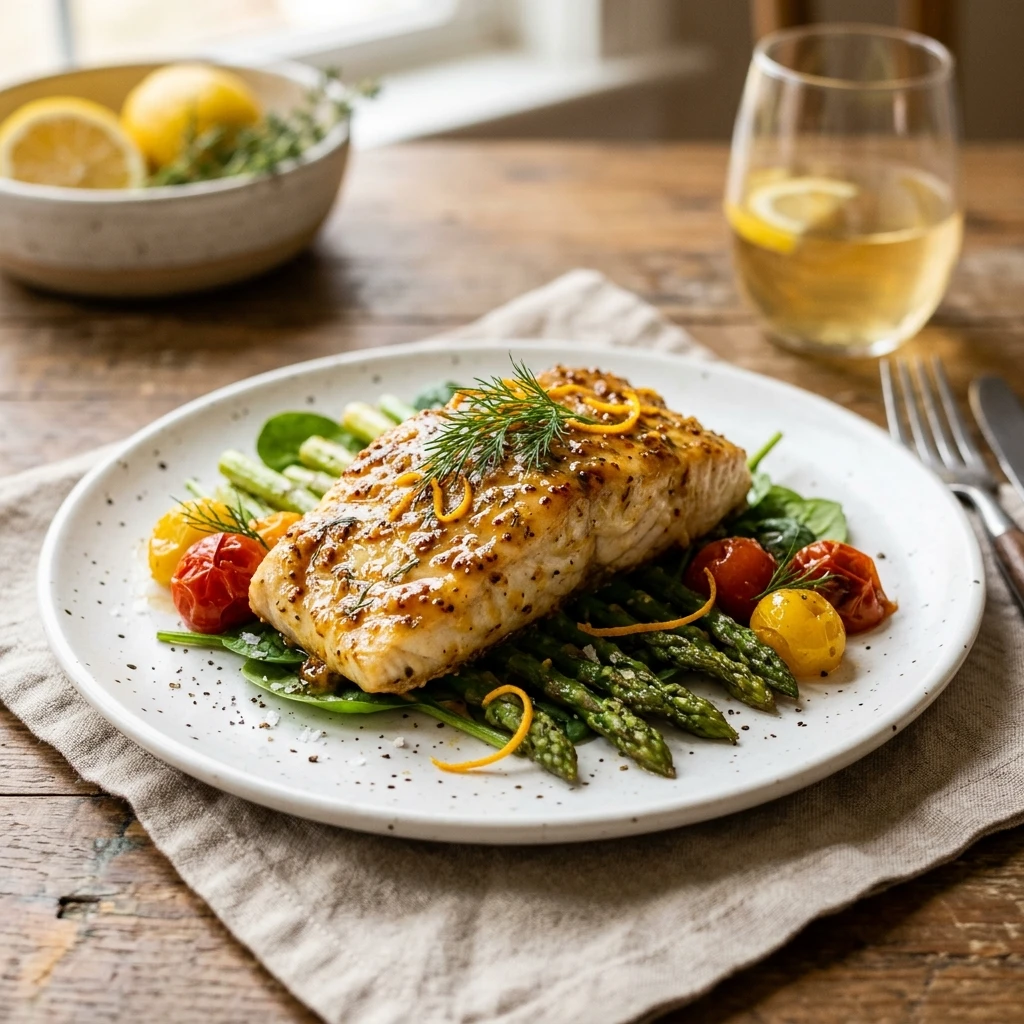
To reheat, avoid the microwave as it can make the fish rubbery. Instead, place the halibut in a baking dish with a splash of water or orange juice. Cover the dish with foil and heat in a 275°F (135°C) oven for about 10 minutes or until warmed through. This gentle method preserves the moisture and delicate texture of the fish.
Make-Ahead Instructions
You can prepare the Orange Dijon glaze up to 24 hours in advance. Store it in a sealed jar in the refrigerator. On the night you plan to serve, simply pat the fish dry, apply the pre-made glaze, and bake. Do not marinate the fish in the glaze for more than 30 minutes before cooking, as the acid in the orange juice can begin to “cook” the delicate flesh, changing its texture.
Frequently Asked Questions
Can I use frozen halibut for this recipe?
Yes, frozen halibut works well. Ensure that you thaw it completely in the refrigerator overnight and pat it very dry with paper towels before adding the glaze to prevent the dish from becoming watery.
How do I know when the halibut is fully cooked?
The fish should change from translucent to opaque. When you press a fork into the thickest part, the layers of the fish should “flake” or pull apart easily. An internal thermometer reading 130-135°F is the safest way to ensure it is moist but cooked through.
What if I don’t have Dijon mustard?
You can use whole-grain mustard for a similar tang and extra texture. Yellow mustard is not recommended as it lacks the complexity and sharp bite required for this specific flavor profile.
Is this recipe suitable for meal prep?
While fish is best served fresh, you can flake leftover Orange Dijon Halibut and serve it cold over a salad or inside a wrap for a high-protein lunch the next day.
Can I grill the halibut instead of baking it?
Absolutely. Preheat your grill to medium-high heat. Place the glazed halibut on a piece of foil or a well-oiled grill grate. Grill for about 5 minutes per side, depending on thickness, until the fish flakes easily.
Common Mistakes to Avoid
- Using Too Much Salt: Halibut has a delicate flavor. Be careful not to oversalt, as the Dijon mustard already contains a fair amount of sodium.
- Crowding the Pan: Leave at least an inch of space between each fillet on the baking sheet. If they are touching, the fish will steam rather than roast, preventing the glaze from caramelizing.
- Skipping the Zest: The orange juice provides the liquid, but the zest provides the “punch.” Don’t skip the zest if you want that vibrant citrus aroma.
- Not Patting the Fish Dry: If the fish is wet, the glaze will slide off into the pan. A dry surface is essential for the glaze to adhere and form a delicious crust.
Conclusion
This Orange Dijon Halibut is a testament to the fact that healthy eating doesn’t have to be boring or complicated. With its vibrant citrus notes and the sophisticated tang of Dijon, it delivers restaurant-quality flavor in the comfort of your own home. It is a fantastic way to enjoy high-quality protein while adhering to halal standards. We hope you enjoy this simple yet elegant meal with your friends and family. For more delicious seafood ideas and healthy weeknight dinners, feel free to explore our other recipes on the blog!
Orange Dijon Halibut

- Cook Time: 25 minutes
- Total Time: 25 minutes
- Diet: Gluten-Free, Halal, Heart-Healthy
Ingredients
- 4 Halibut Fillets: Use 6-ounce portions, preferably skinless for even cooking.
- 1/4 cup Fresh Orange Juice: Provides the citrus base and natural sweetness.
- 1 tablespoon Orange Zest: Adds intense aromatic oils to the glaze.
- 2 tablespoons Dijon Mustard: Adds a sharp, tangy contrast to the sweet orange.
- 1 tablespoon Honey: Helps caramelize the fish and balances the acidity.
- 2 tablespoons Extra Virgin Olive Oil: Keeps the fish moist during the baking process.
- 2 Garlic Cloves: Minced finely to add a savory depth.
- 1/2 teaspoon Salt: Enhances all the individual flavors.
- 1/4 teaspoon Black Pepper: Provides a mild heat.
- Fresh Parsley: Chopped for a bright, herbal garnish.
Instructions
- Preheat your oven to 400°F (200°C). Line a large rimmed baking sheet with parchment paper or lightly grease a glass baking dish with olive oil. Use paper towels to pat the halibut fillets completely dry on all sides. Removing excess moisture is the secret to getting a better texture and ensuring the glaze sticks to the fish rather than sliding off.
- In a small mixing bowl, whisk together the fresh orange juice, orange zest, Dijon mustard, honey, olive oil, and minced garlic. Stir until the honey and mustard are fully incorporated into a smooth emulsion. Season the mixture with half of the salt and pepper.
- Place the halibut fillets on the prepared baking sheet. Sprinkle the remaining salt and pepper over the tops of the fish. Using a spoon or a pastry brush, generously coat the top and sides of each fillet with the Orange Dijon mixture. Save any leftover glaze to brush on halfway through the cooking process if desired.
- Place the baking sheet in the center rack of the oven. Bake for 12 to 15 minutes. The exact time depends on the thickness of your fillets. The halibut is finished when the internal temperature reaches 130°F to 135°F (54°C to 57°C) and the flesh flakes easily with a fork. The glaze should look slightly tacky and golden.
- Carefully transfer the fillets to individual plates using a wide spatula. Drizzle any remaining juices from the pan over the top of the fish. Garnish with a generous sprinkle of freshly chopped parsley and serve immediately while hot.