There is something magical about a true Neapolitan pizza. The soft, pillowy crust, the characteristic “leopard spotting,” and that perfect chew are icons of Italian culinary heritage. While many people think you need a professional wood-fired oven in Naples to achieve this result, you can actually create a world-class crust right in your own kitchen. This recipe focuses on the core principles of authentic Neapolitan dough: high-quality flour, precise hydration, and the patience required for a long, slow ferment. Once you master this dough, you will never want to order takeout pizza again.
Recipe Information
- Prep Time: 20 minutes (plus 24 hours fermentation)
- Cook Time: 5 minutes
- Total Time: 24 hours 25 minutes
- Servings: 4 pizza bases (approx. 250g each)
- Difficulty: Medium
Nutrition values
- Calories: 285 kcal (per serving)
- Protein: 9g
- Carbs: 58g
Why Make This Neapolitan Pizza Dough
This recipe stands out because it prioritizes flavor and texture over speed. By using a long fermentation process, the yeast has time to break down the starches, resulting in a complex, slightly nutty flavor and a dough that is much easier to digest. It uses “Tipo 00” flour, which is finely milled and has the perfect protein content to create a stretchy, elastic dough that won’t tear when you pull it thin. Making this at home gives you full control over the ingredients, ensuring no preservatives or hidden sugars end up on your plate.
Ingredients
- 500g Tipo 00 Flour (Antimo Caputo is a gold standard)
- 325ml Room temperature filtered water
- 15g Sea salt
- 1g Active dry yeast (about 1/4 teaspoon)
- A little extra flour for dusting
Directions
Step 1: Hydrate the Yeast
Pour the room temperature water into a large mixing bowl. Sprinkle the active dry yeast over the surface of the water. Let it sit for about two minutes until the yeast begins to dissolve. Stir gently with your fingers to ensure it is fully incorporated. Do not use hot water, as temperatures above 110°F (43°C) can kill the yeast.
Step 2: Mix the Flour and Salt
Add about 10% of the flour to the water and yeast mixture. Mix with your hand until it forms a thin batter. Add the sea salt to the remaining flour rather than directly into the water; this prevents the salt from inhibiting the yeast too early. Gradually add the rest of the flour to the bowl, mixing continuously until a shaggy dough forms and no dry flour remains.
Step 3: Knead the Dough
Turn the dough out onto a lightly floured surface. Knead the dough by hand for about 10 to 15 minutes. Use the heel of your hand to push the dough away from you, then fold it back over. Continue this process until the dough becomes smooth, elastic, and slightly tacky but not sticky. It should pass the “windowpane test,” meaning you can stretch a small piece of dough thin enough to see light through it without it breaking.
Step 4: Initial Bulk Fermentation
Place the dough ball into a lightly greased bowl and cover it with a damp cloth or plastic wrap. Let it rest at room temperature for about 2 hours. This allows the gluten to relax and the fermentation process to begin. You will notice the dough slightly increasing in volume during this stage.
Step 5: Divide and Ball
After the initial rest, divide the dough into four equal pieces (approximately 250g each). Shape each piece into a tight, smooth ball by pulling the sides toward the bottom. Place the balls into individual airtight containers or a proofing box, leaving plenty of space between them for expansion.
Step 6: Cold Ferment and Final Proof
Place the containers in the refrigerator for at least 24 hours (up to 72 hours for maximum flavor). Remove the dough from the fridge about 2 hours before you plan to bake. Let the balls come to room temperature; they will become soft and easy to stretch. Gently stretch the dough by hand—never use a rolling pin—and top with your favorite ingredients before baking at the highest possible temperature.
Expert Tips for Perfect Neapolitan Pizza Dough
Always use a digital scale to measure your ingredients in grams. Volume measurements like cups are too inaccurate for bread baking. Additionally, ensure your salt is fine sea salt so it dissolves evenly. If you are using a standard home oven, use a pizza stone or steel and preheat it for at least 45 minutes at its maximum setting. For the best “leopard spotting,” try to get your oven as hot as possible.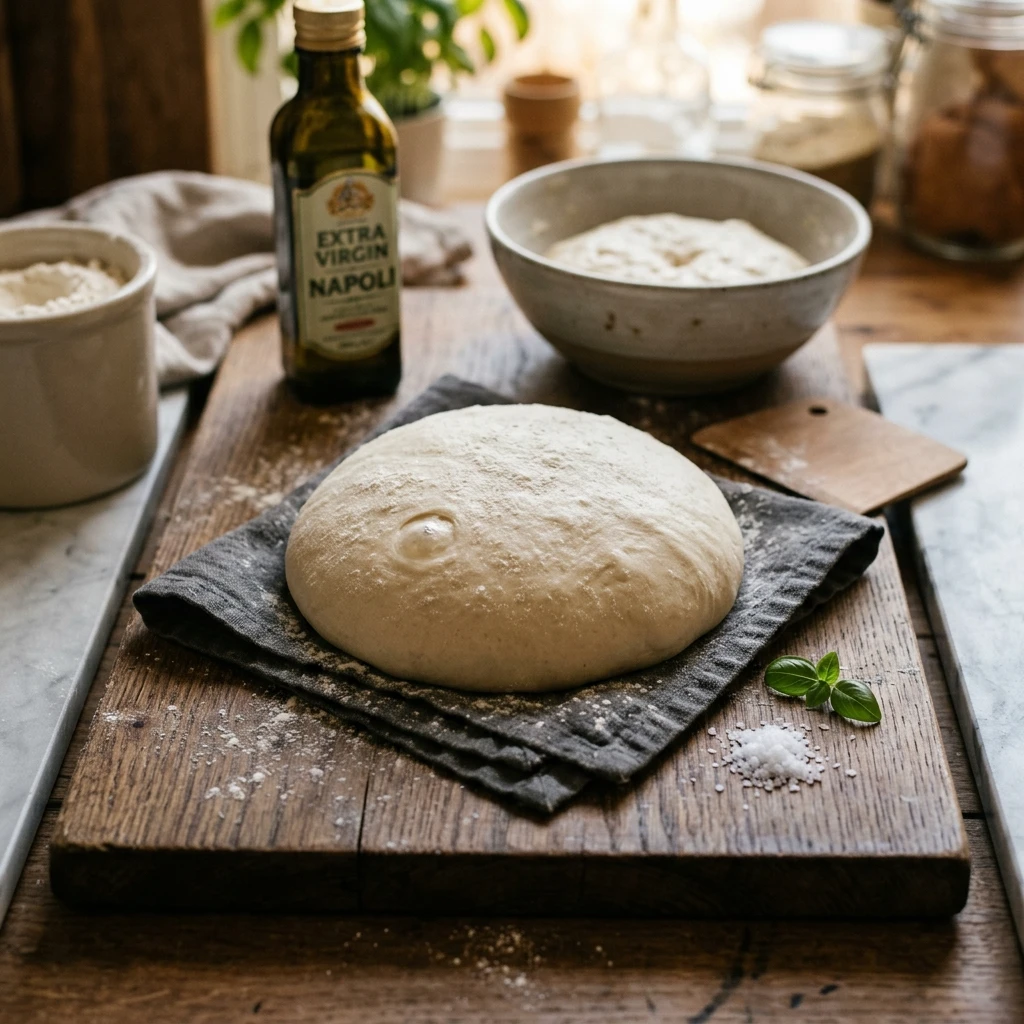
Delicious Variations
While traditional Neapolitan dough is simple, you can experiment with flavor. Add a teaspoon of honey to the water to help the crust brown more easily in home ovens that don’t reach 900°F. You can also substitute 50g of the Tipo 00 flour with whole wheat flour for a heartier, more rustic taste. For a sourdough version, replace the commercial yeast with 50g of active sourdough starter and adjust the water and flour ratios accordingly.
Frequently Asked Questions
Can I use All-Purpose flour instead of Tipo 00?
Yes, you can use All-Purpose flour, but the texture will be slightly different. All-purpose flour has a different protein structure, so the crust may be a bit crunchier and less “airy” than the traditional version.
How long can I keep the dough in the fridge?
The dough is best between 24 and 48 hours. After 72 hours, the yeast may begin to exhaust its food source, and the dough can become overly sour or lose its structural integrity.
Why shouldn’t I use a rolling pin?
A rolling pin forces the air bubbles out of the dough. The goal of Neapolitan pizza is to push the air to the edges (the cornicione) to create that iconic puffed, light crust.
Can I freeze this pizza dough?
Absolutely. After the cold fermentation in the fridge, you can wrap individual dough balls tightly in plastic wrap and freeze them for up to three months. Thaw in the fridge overnight before using.
My dough is too sticky to handle, what should I do?
Resist the urge to dump in more flour. Instead, let the dough rest for 10 minutes to allow the flour to fully hydrate, then try kneading again with slightly damp hands. Neapolitan dough is supposed to be somewhat hydrated and tacky.
Conclusion
Mastering Neapolitan pizza dough is a rewarding journey that brings the flavors of Italy into your kitchen. By following these steps and respecting the fermentation time, you will create a crust that rivals the best pizzerias. Remember that practice makes perfect, so don’t be discouraged if your first stretch isn’t a perfect circle. Fire up your oven, gather your toppings, and enjoy the incredible crunch and chew of your homemade masterpiece!
Neapolitan Pizza Dough
Ingredients
Method
- Pour the room temperature water into a large mixing bowl. Sprinkle the active dry yeast over the surface of the water. Let it sit for about two minutes until the yeast begins to dissolve. Stir gently with your fingers to ensure it is fully incorporated.
- Add about 10% of the flour to the water and yeast mixture. Mix with your hand until it forms a thin batter. Add the sea salt to the remaining flour rather than directly into the water.
- Gradually add the rest of the flour to the bowl, mixing continuously until a shaggy dough forms and no dry flour remains.
- Turn the dough out onto a lightly floured surface and knead the dough by hand for about 10 to 15 minutes until smooth and elastic.
- Place the dough ball into a lightly greased bowl, cover it with a damp cloth, and let it rest at room temperature for about 2 hours.
- After the initial rest, divide the dough into four equal pieces (approximately 250g each) and shape each piece into a tight ball.
- Place the balls into airtight containers or a proofing box and refrigerate for at least 24 hours.
- Remove the dough from the fridge about 2 hours before baking to let it come to room temperature.
- Gently stretch the dough by hand before topping with your desired ingredients and baking at the highest temperature possible.