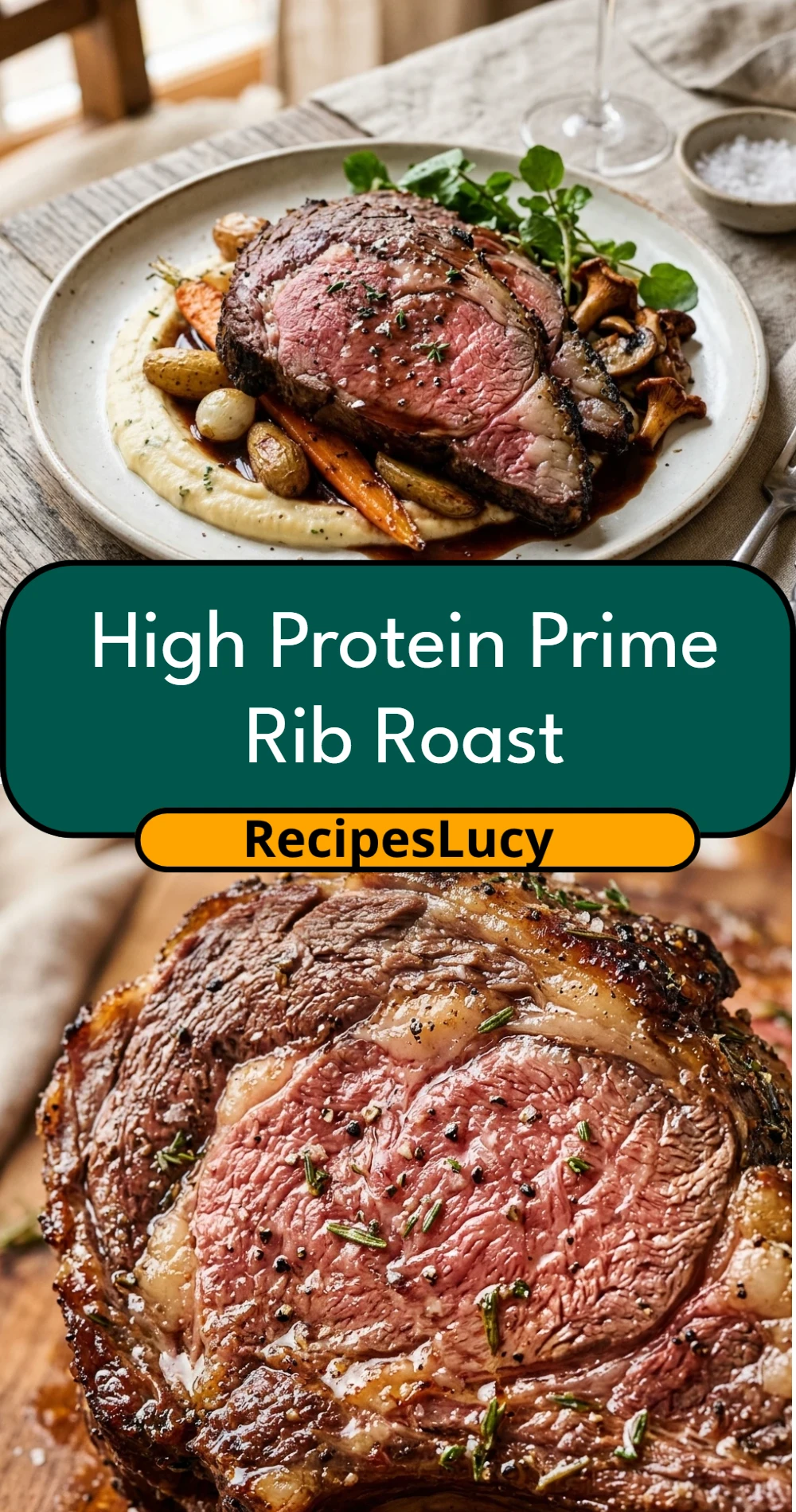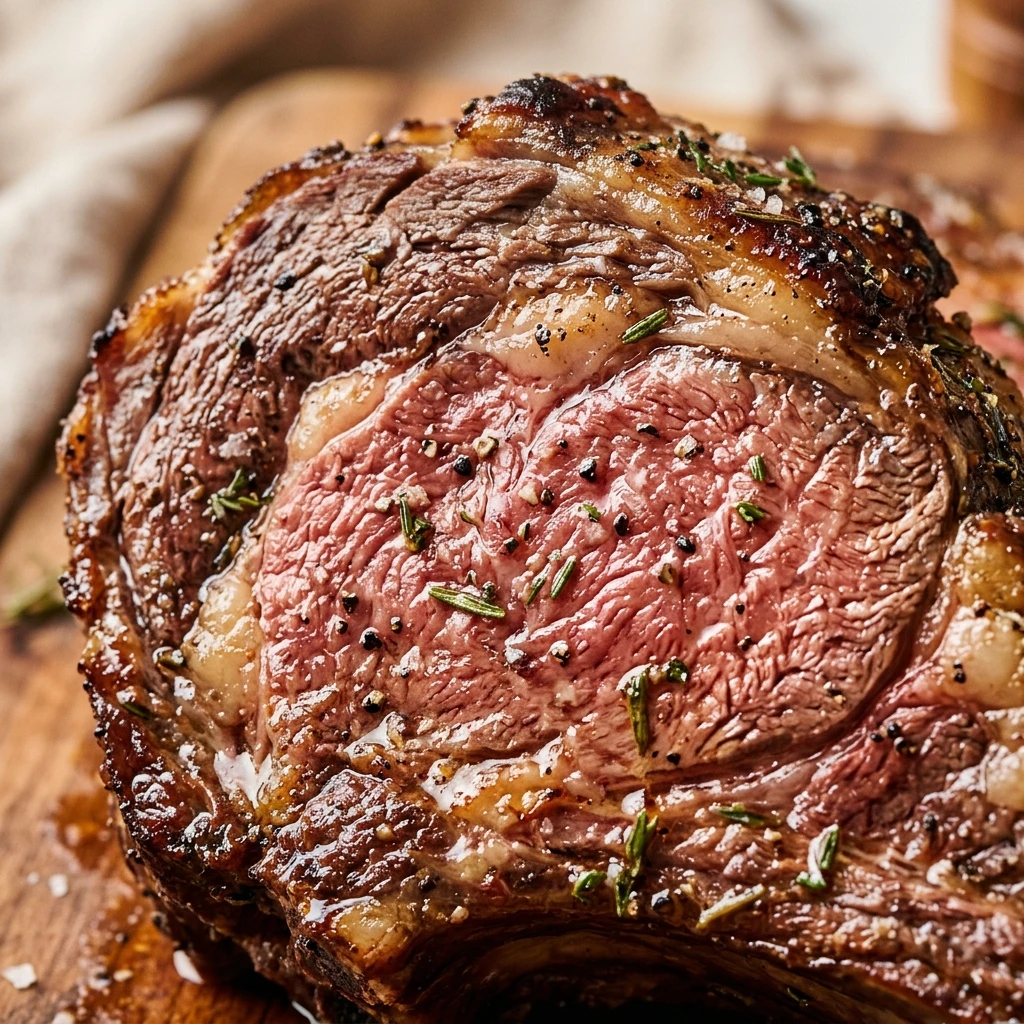
There is nothing quite as impressive as a perfectly crusted, juicy prime rib sitting at the center of your dinner table. While often reserved for holidays, this High Protein Prime Rib Roast is designed for anyone looking to enjoy a luxurious, muscle-building meal without the unnecessary additives found in restaurant versions. By focusing on high-quality halal beef and a robust herb rub, you can achieve a steakhouse-quality result right in your own kitchen. This recipe delivers a massive punch of protein per serving, making it an ideal choice for fitness enthusiasts and families alike who want a nutritious yet indulgent feast.
Recipe Information
- Prep Time: 20 minutes
- Cook Time: 2 hours 30 minutes
- Total Time: 2 hours 50 minutes
- Servings: 8 servings
- Difficulty: Medium
Nutrition Values
- Calories: 580 kcal
- Protein: 48g
- Carbs: 2g
- Fat: 42g
- Fiber: 0.5g
Why Make This High Protein Prime Rib Roast
Choosing a High Protein Prime Rib Roast means you are prioritizing satiety and muscle recovery without sacrificing flavor. Prime rib is naturally dense in essential vitamins like B12 and zinc, which support energy levels and immune function. This specific preparation method uses a low-and-slow roasting technique to ensure the meat remains tender and retains its juices, while the high-heat finish creates a savory, protein-rich crust. It is also a fantastic option for those following low-carb or ketogenic lifestyles, as it is naturally free of sugars and fillers.
Ingredients
- 6 to 7 lbs Standing Rib Roast: Ensure it is a halal-certified beef roast with the bones still attached for maximum flavor.
- 4 tablespoons Olive Oil: Helps the herb rub stick to the meat and aids in browning.
- 5 cloves Garlic: Minced finely to infuse the meat with aromatic flavor.
- 2 tablespoons Fresh Rosemary: Chopped finely; rosemary provides a classic earthy aroma.
- 2 tablespoons Fresh Thyme: Adds a subtle minty and lemony undertone.
- 1 tablespoon Kosher Salt: Essential for drawing out moisture to create a crust and seasoning the deep muscle fibers.
- 1 tablespoon Cracked Black Pepper: Provides a bold, spicy bite.
- 1 cup Beef Broth: Used for the roasting pan to keep the oven moist and to create a delicious au jus (replaces traditional wine).
- 1 tablespoon Balsamic Vinegar: Adds acidity and depth to the beef broth for the pan sauce.
Directions
Step 1: Preparation and Room Temperature Tempering
Remove the rib roast from the refrigerator at least 2 hours before you plan to cook it. Bringing the meat to room temperature is critical for even cooking. If the center is too cold, the outside will overcook before the middle reaches the desired temperature. Pat the entire roast dry with paper towels to remove excess moisture, which helps in achieving a better sear. In a small bowl, mix the olive oil, minced garlic, rosemary, thyme, salt, and pepper into a thick paste.
Step 2: Seasoning the Roast
Rub the herb and garlic paste over the entire surface of the roast, ensuring you cover the ends and the bone side. Use your hands to massage the seasoning into the crevices. Place the roast in a heavy roasting pan with the fat side facing up. The fat will melt during the cooking process, naturally basting the meat and keeping it succulent.
Step 3: High-Heat Initial Sear
Preheat your oven to 450°F (232°C). Place the roast in the oven and cook for 15 to 20 minutes. This high-heat blast creates a beautiful brown crust (the Maillard reaction) that locks in flavor. Watch closely to ensure the garlic does not burn; it should be golden and fragrant.
Step 4: Slow Roasting
Reduce the oven temperature to 325°F (163°C). Pour the beef broth and balsamic vinegar into the bottom of the roasting pan, being careful not to pour it directly over the meat. Insert a meat thermometer into the thickest part of the roast, away from the bone. Continue roasting until the internal temperature reaches 120°F (49°C) for rare or 130°F (54°C) for medium-rare. This usually takes about 13 to 15 minutes per pound.
Step 5: The Essential Rest
Once the roast reaches your target temperature, remove it from the oven and transfer it to a cutting board. Tent it loosely with aluminum foil. Let the meat rest for at least 20 to 30 minutes. This allows the fibers to relax and the juices to redistribute. If you cut it too soon, all the moisture will run out, leaving the meat dry.
Step 6: Plating and Serving
Carve the roast by running a long, sharp knife along the curve of the bones to remove them. Slice the meat into thick or thin portions based on your preference. Strain the liquid from the roasting pan into a small saucepan, simmer for 5 minutes to reduce slightly, and serve this au jus on the side.
What to Serve with High Protein Prime Rib Roast
To keep the meal balanced and high in nutrition, pair your prime rib with fiber-rich sides. Roasted Brussels sprouts with halal beef bacon bits offer a smoky, crunchy contrast. A creamy cauliflower mash is an excellent low-carb alternative to traditional potatoes. For a refreshing side, a crisp arugula salad with a lemon-tahini dressing cuts through the richness of the beef. If you prefer a starch, consider garlic-roasted red potatoes. For drinks, a sparkling pomegranate juice or a chilled herbal tea complements the savory herbs perfectly.
Expert Tips for Perfect High Protein Prime Rib Roast
- Use a Meat Thermometer: This is the only way to guarantee a perfect internal temperature. Don’t rely on time alone, as every oven and every cut of beef is different.
- Don’t Trim the Fat: While you want a high-protein meal, the fat cap protects the meat from drying out. You can always trim it off your individual slice after cooking.
- Salt Early: If you have time, salt the roast 24 hours in advance and leave it uncovered in the fridge. This “dry brines” the meat for incredible flavor.
- Avoid Peeking: Keep the oven door closed. Every time you open it, the temperature drops significantly, which can lead to uneven cooking.
Delicious Variations
- Horseradish Crust: Mix 2 tablespoons of prepared horseradish into your herb paste for a spicy, sinus-clearing kick.
- Beef Bacon Wrapped: Wrap the roast in thin slices of halal beef bacon before roasting for an extra layer of smoky protein.
- Smoked Prime Rib: If you have a smoker, cook the roast at 225°F (107°C) with hickory or oak wood until it reaches the desired internal temp for a deep, smoky profile.
- Chili-Rubbed: Swap the rosemary and thyme for cumin, smoked paprika, and chili powder for a southwestern twist.
Storage and Reheating Instructions
Store leftover prime rib in an airtight container in the refrigerator for up to 3 to 4 days. If you wish to freeze it, wrap slices tightly in plastic wrap and then aluminum foil; it will stay fresh for up to 3 months. To reheat without losing that perfect medium-rare pinkness, place slices in a baking dish with a splash of beef broth, cover with foil, and warm in a 250°F (121°C) oven until just heated through. Avoid the microwave, as it will turn the tender beef rubbery and gray.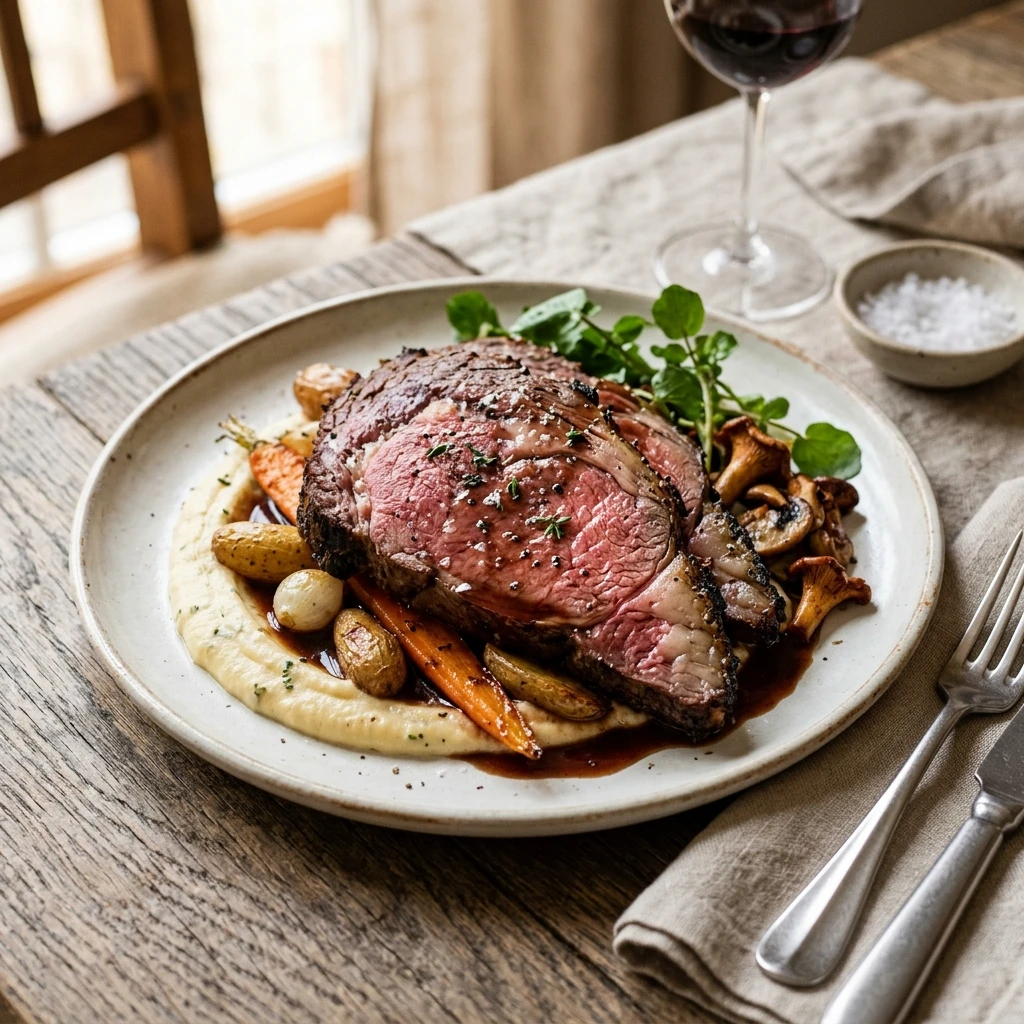
Make-Ahead Instructions
You can prepare the herb rub and coat the roast up to 48 hours in advance. Store it uncovered in the refrigerator. This not only saves time on the day of your dinner but also acts as a dry brine, improving the texture of the meat. The au jus can also be made a day ahead using beef bones and broth, then simply reheated with the pan drippings from the actual roast right before serving.
Frequently Asked Questions
Can I use a boneless roast for this recipe?
Yes, you can use a boneless ribeye roast. However, reduce the cooking time slightly as boneless roasts cook faster. The flavor may be slightly less intense without the bones, but it is much easier to slice.
What temperature is medium-rare for prime rib?
For medium-rare, pull the roast out of the oven when it hits 130°F (54°C). The temperature will rise another 5 degrees while it rests, reaching the ideal 135°F (57°C).
How much prime rib should I buy per person?
A good rule of thumb is 1 pound per person for a bone-in roast or 1/2 to 3/4 pound for a boneless roast. This ensures everyone gets a generous serving with some left over for sandwiches.
Is prime rib the same as ribeye?
They come from the same primal cut. A prime rib is the whole roast (usually 2 to 7 ribs), while a ribeye is a steak cut from that roast. This recipe uses the whole roast for a more dramatic presentation.
How do I make the au jus without wine?
This recipe uses high-quality beef broth and a touch of balsamic vinegar or Worcestershire sauce (halal certified) to mimic the acidity and depth that wine usually provides. It results in a rich, savory sauce that everyone can enjoy.
Common Mistakes to Avoid
- Cooking Straight from the Fridge: This leads to a cold center and overcooked edges. Always temper the meat.
- Overcooking: Prime rib is best served rare or medium-rare. Once it passes 145°F, it becomes tough and loses its signature texture.
- Skipping the Rest: If you cut the meat immediately, you will lose the moisture that makes this cut so expensive and delicious.
- Using Thin Pans: Use a heavy-duty roasting pan or a cast-iron skillet to ensure the heat is distributed evenly and the drippings don’t burn.
Conclusion
Creating a High Protein Prime Rib Roast at home is a rewarding experience that yields a meal as nutritious as it is flavorful. By following the slow-roasting method and using fresh, halal-compliant ingredients, you ensure a centerpiece that is both healthy and incredibly satisfying. Whether you are hosting a dinner party or meal-prepping for a high-performance week, this roast is a guaranteed winner. We encourage you to try this recipe and share it with your loved ones. For more high-protein meal ideas and healthy beef recipes, feel free to explore our other guides on the blog!