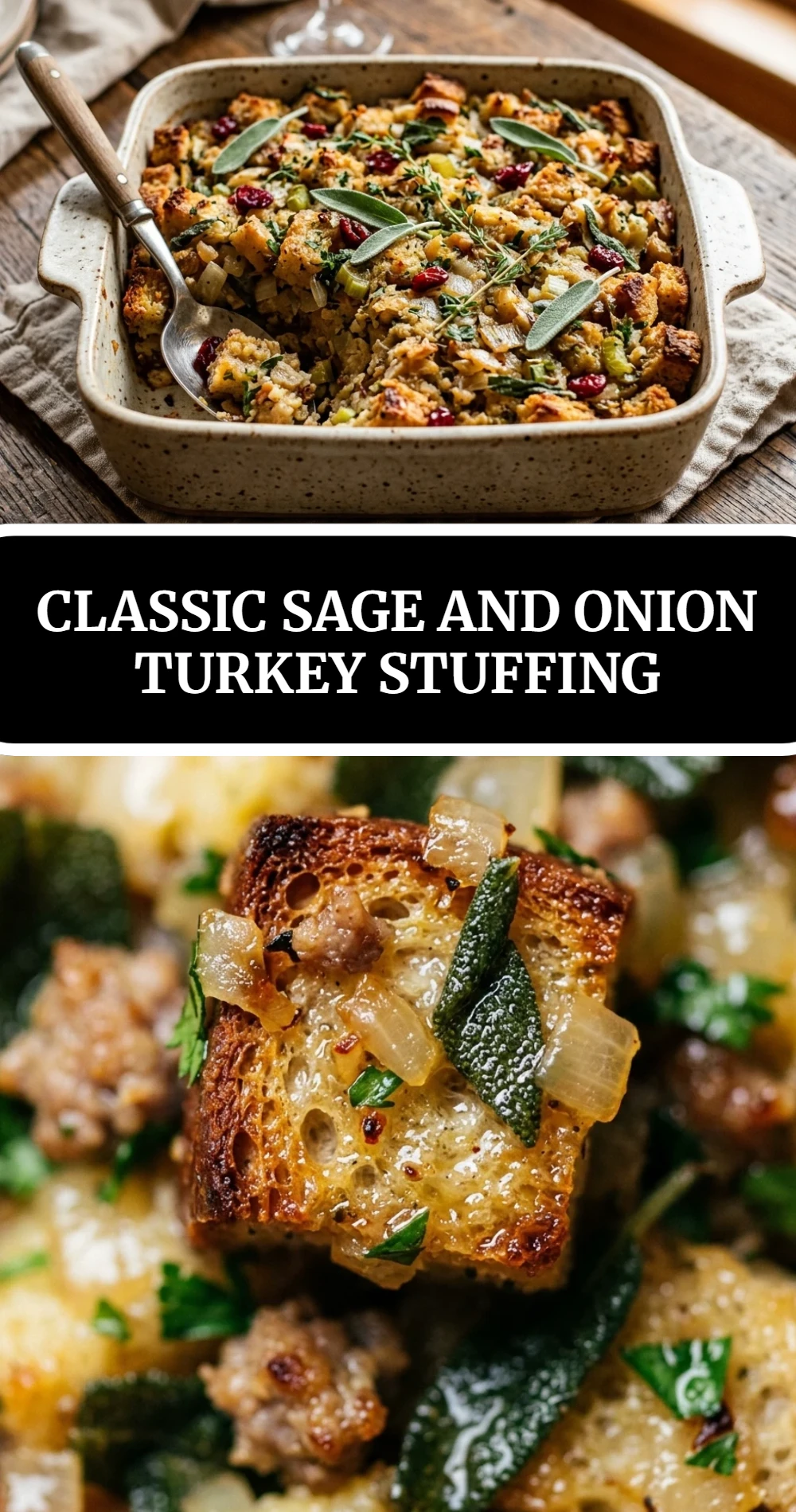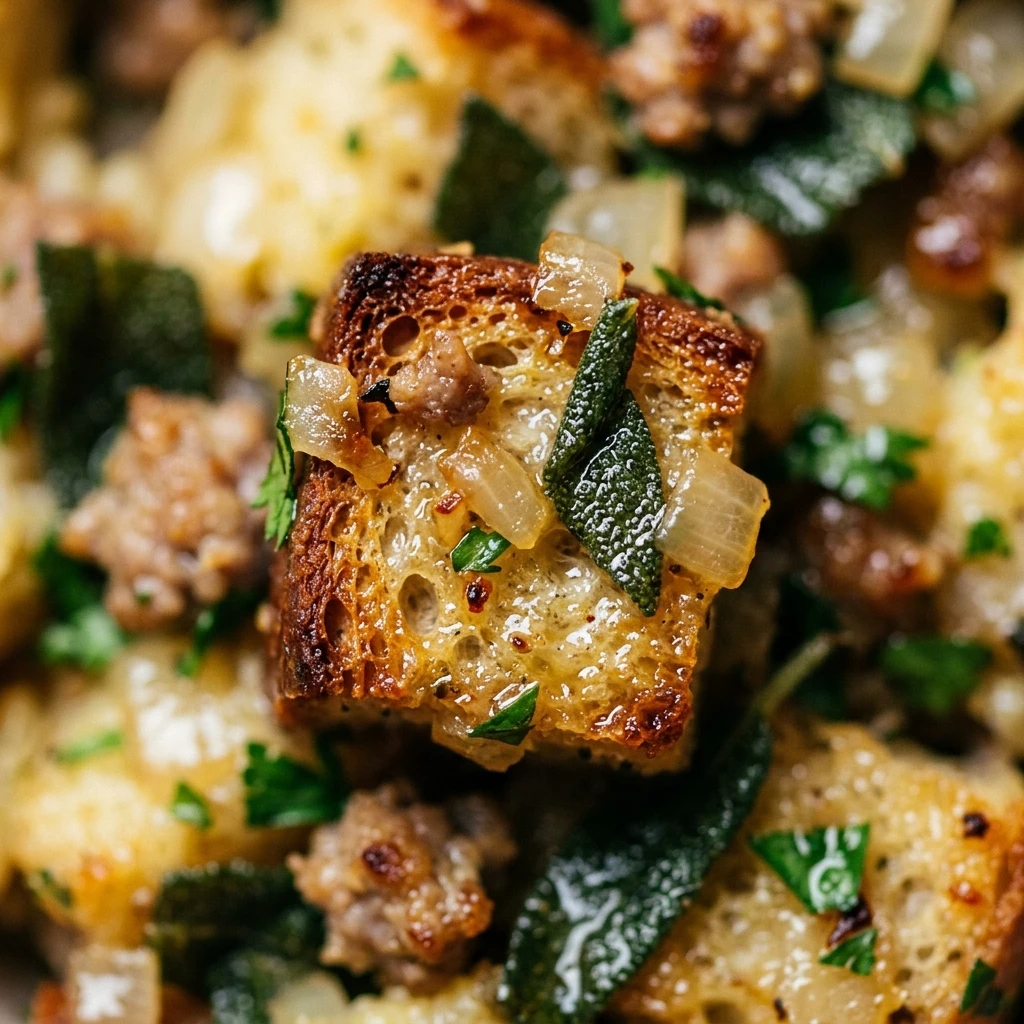
Nothing says a holiday dinner like the warm, aromatic scent of Classic Sage and Onion Turkey Stuffing wafting through the kitchen. This traditional side dish brings back memories of family gatherings and cozy winter nights. It features a perfect balance of savory herbs, sweet onions, and buttery bread that everyone loves. Whether you bake it inside the turkey or in a separate dish, this stuffing is the ultimate comfort food. The golden-brown top offers a satisfying crunch, while the inside remains moist and flavorful, making it the star of your dinner table.
Why Make This Classic Sage and Onion Turkey Stuffing
This recipe is a timeless favorite for many reasons. First, it uses simple, wholesome ingredients that are easy to find in any grocery store. The combination of fresh sage and earthy onions creates a deep flavor profile that complements poultry perfectly. It is also very versatile; you can easily adjust the moisture level to suit your personal preference. Most importantly, making your own stuffing from scratch tastes significantly better than any boxed mix. It allows you to control the quality of the bread and the intensity of the seasoning, ensuring a high-quality dish every time.
How to Make Classic Sage and Onion Turkey Stuffing
Making this stuffing is a straightforward process that even beginner cooks can master. You start by preparing your bread cubes, ensuring they are dry and slightly toasted. Then, you sauté the onions and celery in plenty of butter until they are soft and translucent. This step releases the natural sweetness of the vegetables. Next, you mix the bread with the sautéed vegetables and fresh herbs. After adding a savory broth and beaten eggs to bind everything together, you bake it until the top is crisp and the middle is tender. It is a simple method that yields professional results.
Ingredients
- 12 cups of dried bread cubes (white or sourdough work best)
- 1/2 cup unsalted butter
- 2 large yellow onions, finely diced
- 4 stalks of celery, chopped
- 3 tablespoons fresh sage, finely minced
- 1 tablespoon fresh thyme leaves
- 2 1/2 cups halal chicken or vegetable broth
- 2 large eggs, lightly beaten
- 1 teaspoon sea salt
- 1/2 teaspoon freshly ground black pepper
- 1/2 cup fresh parsley, chopped
Directions
- Preheat your oven to 350°F (175°C). Lightly grease a 9×13 inch baking dish with butter or cooking spray.
- Place the dried bread cubes in a very large mixing bowl and set them aside.
- In a large skillet, melt the butter over medium heat. Add the diced onions and celery. Sauté for about 8 to 10 minutes until the vegetables are soft and fragrant.
- Stir the fresh sage and thyme into the skillet and cook for another minute to wake up the oils in the herbs.
- Pour the buttery vegetable mixture over the bread cubes in the large bowl. Add the fresh parsley, salt, and pepper. Toss gently to combine.
- In a separate small bowl, whisk together the broth and the beaten eggs.
- Slowly pour the liquid mixture over the bread cubes. Stir gently until all the bread is moistened but not soggy.
- Transfer the mixture into the prepared baking dish. Spread it out evenly but do not pack it down too tightly.
- Cover the dish with foil and bake for 20 minutes.
- Remove the foil and bake for another 20 to 25 minutes until the top is golden brown and slightly crispy.
Nutritional Information
This nutritional information is an estimate per serving (based on 10 servings):
- Calories: 245 kcal
- Total Fat: 11g
- Saturated Fat: 6g
- Cholesterol: 65mg
- Sodium: 580mg
- Total Carbohydrates: 30g
- Dietary Fiber: 2g
- Sugars: 4g
- Protein: 6g
- Potassium: 150mg
How to Serve Classic Sage and Onion Turkey Stuffing
This stuffing is the perfect companion to a roast turkey, but it also pairs beautifully with roast beef or chicken. Serve it hot right out of the oven for the best texture. You can drizzle a generous amount of warm halal gravy over the stuffing to add even more richness. For a beautiful presentation, garnish the serving dish with extra sprigs of fresh sage or parsley. It also goes wonderfully alongside mashed potatoes, cranberry sauce, and roasted root vegetables like carrots and parsnips.
How to Store Classic Sage and Onion Turkey Stuffing
If you have leftovers, allow the stuffing to cool completely before storing. Place it in an airtight container and keep it in the refrigerator for up to 3 to 4 days. To reheat, place the desired amount in an oven-safe dish, add a splash of broth to keep it moist, and cover with foil. Heat at 350°F until warmed through. You can also freeze this stuffing for up to one month. Thaw it in the refrigerator overnight before reheating it in the oven to restore that lovely crispy top.
Expert Tips for Perfect Classic Sage and Onion Turkey Stuffing
- Use Stale Bread: If your bread is too fresh, the stuffing will become mushy. Leave your bread cubes out on a tray overnight or toast them in a low oven until they are dry and firm.
- Don’t Overmix: When combining the liquid with the bread, use a light hand. Overmixing can break down the bread cubes and create a heavy, dense texture.
- Adjust the Broth: Add the broth gradually. Some bread types absorb more liquid than others. You want the bread to be wet but not sitting in a pool of liquid.
- Fresh Herbs are Key: While dried herbs work in a pinch, fresh sage and thyme provide a vibrant flavor and aroma that dried herbs simply cannot match.
- The Egg Factor: The eggs act as a binder, giving the stuffing a light, almost souffle-like quality inside. Don’t skip them if you want that classic texture.
Delicious Variations
- Apple and Cranberry: Add 1 cup of chopped tart apples and 1/2 cup of dried cranberries for a sweet and savory twist.
- Beef Sausage Stuffing: Brown some halal beef sausage crumbles and mix them in with the bread cubes for a meatier version.
- Mushroom and Leek: Replace the onions with leeks and add 2 cups of sautéed cremini mushrooms for an earthy, umami-rich flavor.
- Nutty Crunch: Stir in 1/2 cup of toasted chopped pecans or walnuts just before baking for extra texture.
- Gluten-Free: Simply swap the traditional bread cubes for your favorite gluten-free bread cubes to accommodate dietary needs.
Frequently Asked Questions
Can I make this stuffing ahead of time?
Yes! You can prepare the mixture, place it in the baking dish, and keep it covered in the fridge for up to 24 hours before baking. Just add a few extra minutes to the baking time since it will be cold.
What kind of bread is best for stuffing?
A sturdy white bread, French bread, or sourdough works best. Avoid very soft, thin-sliced sandwich bread as it can turn to mush quickly.
Can I use dried herbs instead of fresh?
Yes, you can. Use 1 teaspoon of dried herbs for every tablespoon of fresh herbs called for in the recipe.
Is it safe to cook the stuffing inside the turkey?
Yes, but you must ensure the center of the stuffing reaches an internal temperature of 165°F (74°C) to be safe to eat. This often means the turkey meat may overcook, which is why many chefs prefer baking it separately.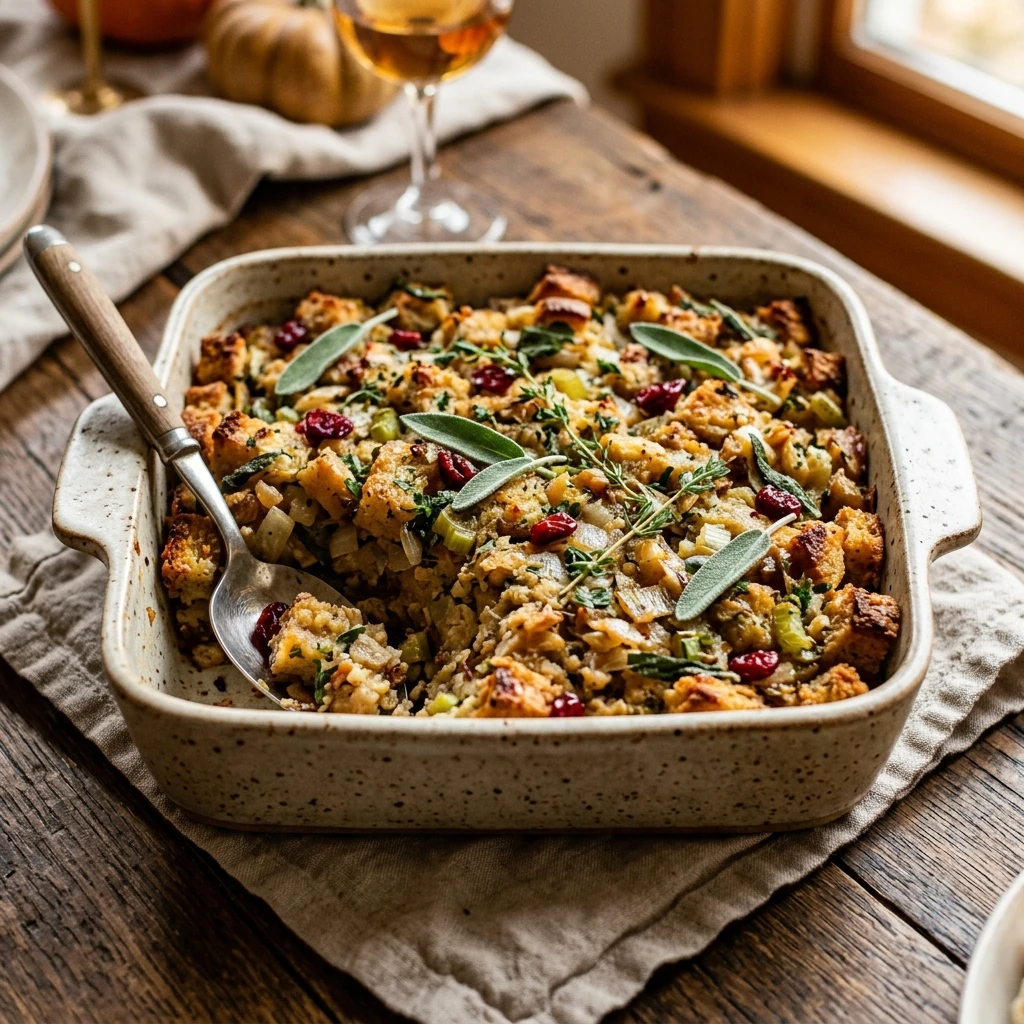
How do I fix soggy stuffing?
If your stuffing is too wet, bake it uncovered for a longer period. You can also spread it out on a larger baking sheet to increase the surface area for evaporation.
How do I fix dry stuffing?
If the stuffing looks dry, drizzle a little more warm broth over the top and cover it with foil for 10 minutes to let it steam and soften.
Can I use vegetable broth instead of chicken broth?
Absolutely! Vegetable broth works perfectly and keeps the dish vegetarian-friendly if you omit any meat additions.
Why do I need to add eggs?
Eggs help bind the bread cubes together so the stuffing holds its shape when scooped. They also contribute to a richer flavor and better internal texture.
Can I use a slow cooker for this recipe?
Yes, you can cook this on low for 3 to 4 hours in a slow cooker. However, you will miss out on the crispy top that the oven provides.
What can I use instead of butter?
You can use a high-quality olive oil or a plant-based butter substitute, though the flavor will be slightly different.
Conclusion
Classic Sage and Onion Turkey Stuffing is more than just a side dish; it is a centerpiece of holiday tradition. With its crispy golden crust and tender, herb-infused center, it brings a sense of warmth and satisfaction to any meal. This recipe is easy to follow and uses simple, halal-friendly ingredients that highlight the best flavors of the season. We encourage you to try this recipe for your next big dinner and see how quickly it disappears! Don’t forget to share your results with us and tell us which variation was your favorite. Happy cooking!